


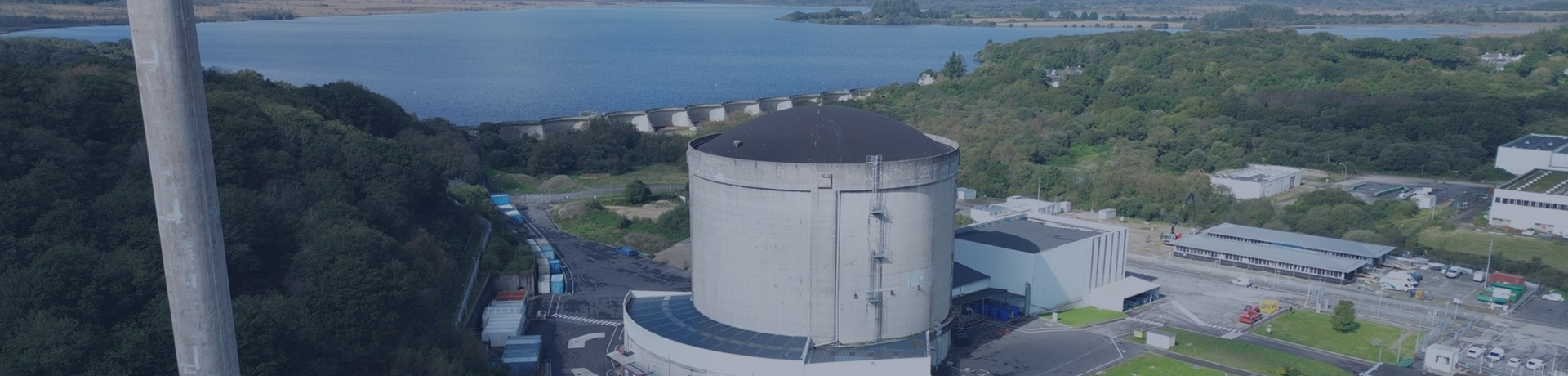
Dismantling EDF's Brennilis nuclear power plant: a tailor-made SPS mission
What does the dismantling phase entail and what are its specific features?
The first projects to be carried out under the full dismantling decree, which began in December 2024, involve freeing up space by removing around ten kilometers of piping surrounding the vessel. This will be followed by operations to extract the internals of the canals still present in the vessel.
This work will be spread over 4 years, before the 2nd major stage is launched: the installation of the shielded workshops that will be used to condition the future waste from the reactor.
Next comes the major stage of complete dismantling, the cutting of the reactor vessel, for which robots have been designed and developed in collaboration with the Jules Verne Technological Research Institute in Nantes and Graphitech, a subsidiary of the EDF and Veolia group, which combines EDF's nuclear industry and dismantling engineering skills with Veolia's nuclear environment robotics skills, enabling the design of special machines and remote intervention platforms for dismantling.
Finally, the last stage will consist of cleaning up the enclosure and the soil before demolishing it and leaving the land bare in 2041.
What's at stake on this particular site?
There are many important issues at stake in this unprecedented project:
- Safety is our top priority. Our objective is 0 accidents
- Radiological risk management for all those involved, EDF employees and partner companies.
- Continuity of operation during dismantling operations (periodic testing, monitoring, ventilation, fire protection, etc.)
- Keeping to the dismantlingschedule, with a completion date as stipulated by decree.
What's so special about this health and safety coordination assignment?
Today, the site welcomes between 80 and 90 people a day, rising to 140 during the "reactor core" phase at the end of the project. Coordinating the various players on this uniquely challenging dismantling site to ensure their safety is a major challenge for EDF. Apave's expertise in Safety and Health Protection Coordination (SPS) goes beyond regulatory compliance. Apave's teams must have the cutting-edge skills to anticipate risks in specific fields, such as radiation protection, to avoid any risk of contamination, or to deal with the discovery of asbestos or "CMR" chemical agents. In the future, safety issues will evolve with the systematic presence of radiological risk.
As mentioned above, EDF is working upstream, with the aim of building dedicated robots specific to the Brennilis site, to carry out the highest-risk operations and thus minimize human intervention and the risk of exposure. The coordinator's support and advisory role will be a key element in managing site safety.
Integrating a site with dismantling work on this scale requires a great deal of work to familiarize oneself with the various applicable EDF standards.
An essential point in the role of the SPS coordinator is to be able to pass on to industrial partners the general principles of prevention, rather than focusing solely on individual protection. Of course, mastery of regulations and standards is essential.
In addition to know-how and expertise, the quality of the assignment also depends on the coordinator's interpersonal skills, and his or her attitude towards site workers. Relational skills are essential.
How did the relationship of trust develop? What are Apave's strengths?
We've been working with the Brest agency since 2019, so it's a story of trust that enabled the Apave teams to obtain the mission of SPS (Health and Safety Protection) coordinator, previously internalized.
EDF's intention is to rely on the safety expertise and technical support provided by Apave's teams on this unusual project.
In this respect, Apave's strengths are of several kinds:
- Excellent command of regulations and their evolution, in terms of both conventional and radiological risks.
- Sustained expertise and the ability to provide unsolicited advice
- Ability to adapt to a fast-changing schedule
- Open communication, in particular the presence of management at our quarterly meetings, which enables regular updates on scheduling, invoicing, etc., as well as raising and resolving any difficulties that may arise.
Special features of the Brennilis site
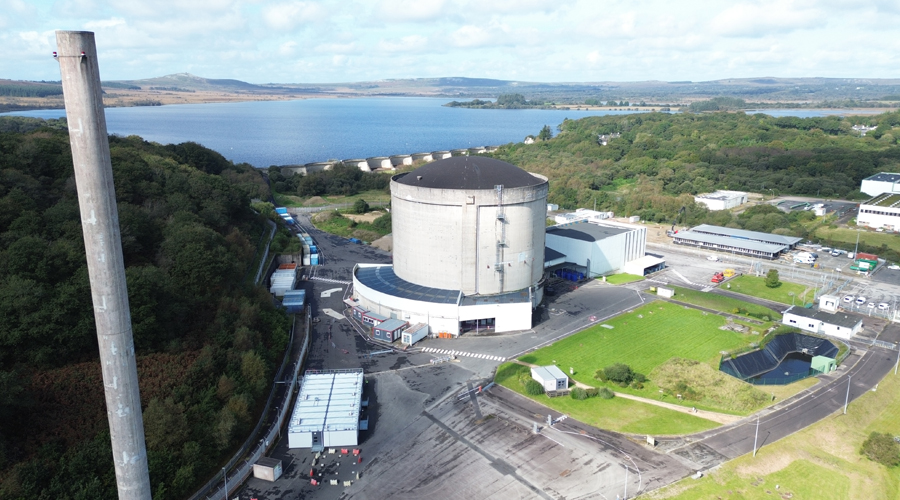
Located in the heart of the Monts d'Arrée in Finistère, the Brennilis nuclear power plant is unique in France: it is the only one to have used heavy water technology with a carbon dioxide-cooled reactor. This 70-megawatt reactor had a horizontal tank for recharging during operation, a rare configuration. After 18 years of production, the plant was shut down for good in 1985. The reactor containment, impressive in its dimensions (56 meters high, 46 meters in diameter, 60 cm thick reinforced concrete walls), still houses the reactor block, comprising 216 pressure tubes in the vessel and several kilometers of piping around the vessel. This dismantling project, unprecedented in its complexity, marks a major milestone in the decommissioning process.
Our services :
 Discover Apave's nuclear services
Discover our other
news