
Sustainable Mobility
Accelerate the transition and support new uses
Mobility is at the heart of Apave’s operations, with its teams working closely with clients and infrastructure on a daily basis. Reducing the carbon footprint of travel is therefore a key driver of the Group’s decarbonization strategy.
Travel currently accounts for more than 30% of our greenhouse gas emissions. Every kilometer counts: taking a few minutes to choose the most appropriate mode of transportation helps limit our impact.
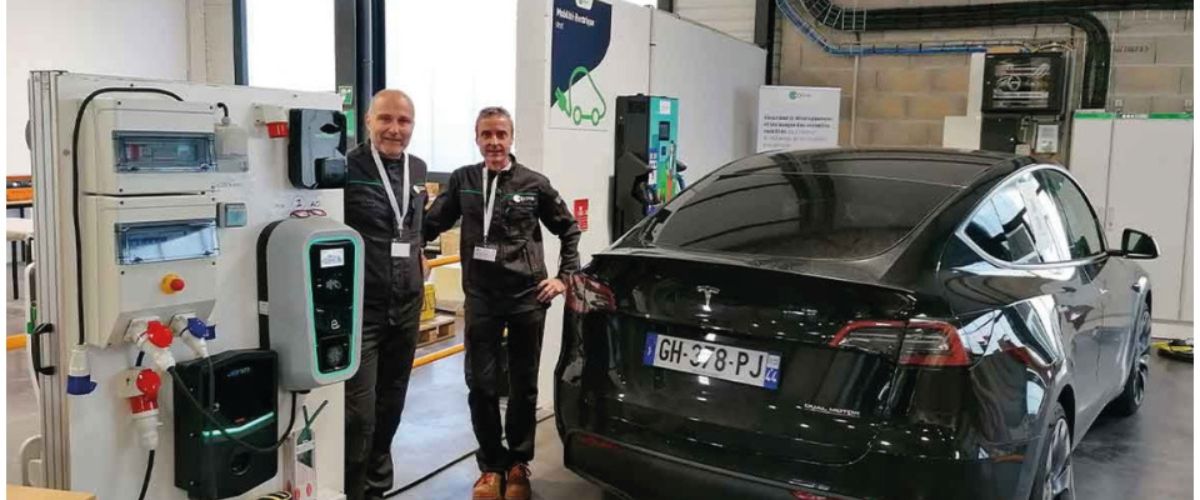
A gradually electrified fleet
Electric Mobility: Employee Feedback
A very pleasant surprise—the car is a joy to drive and very comfortable, even on narrow roads and over speed bumps. It’s easy and smooth to handle. The design is great, and the range is excellent for a small car.
After test-driving an electric R5, I found the ride to be very smooth, enjoyable, and powerful. The design is very modern.
Driving an electric vehicle is very comfortable, especially on daily commutes. This test drive gave me a better understanding of its potential uses.
Supporting these modes of transportation
The transformation also relies heavily on efforts to support employees: vehicle test drives, webinars, educational resources, and internal tools help employees adopt these new practices.
Developing Shared Mobility
An additional strategy for reducing the carbon footprint. Sustainable transportation is a key strategy for reducing the Group’s carbon footprint.
Apave also encourages alternative modes of transportation, notably through a carpooling program with its partner Karos, rolled out at three sites: Marseille, Lyon Saint-Priest, and Lyon Limonest, where parking spaces are reserved for carpoolers.
In 2025: 133 employees used the service (including 12 regular carpoolers)
- 1,108 trips were made
- A total of 2,079 kg of CO2 avoided
- €4,097 in savings.
Encourage more responsible driving
All new employees complete a mandatory road safety awareness module as part of their onboarding.
In addition, Apave offers an in-person eco-friendly driving course that includes a driving simulator and discussions on best practices aimed at reducing energy consumption and improving safety.
The goal is to train 1,000 employees each year.